Lecture 13:定语从句
考研英语学习笔记:Lecture 13:定语从句。保留原始公式、图示与例题。
本页目录
13.1 定语从句基本概念
13.1.1 定语
定语从句和主从复合句
- 定语从句是主从复合句当中的一种;
什么是定语
- 定语:
- 1. 当表达的信息少时,可以用一个词来作为定语;
- 2. 当表达的信息量比较大时,就需要一个句子来限定名词,此时就是一个句子作为定语,放在名词后来限定、修饰名词;
13.1.1 定语从句
定语从句基本概念
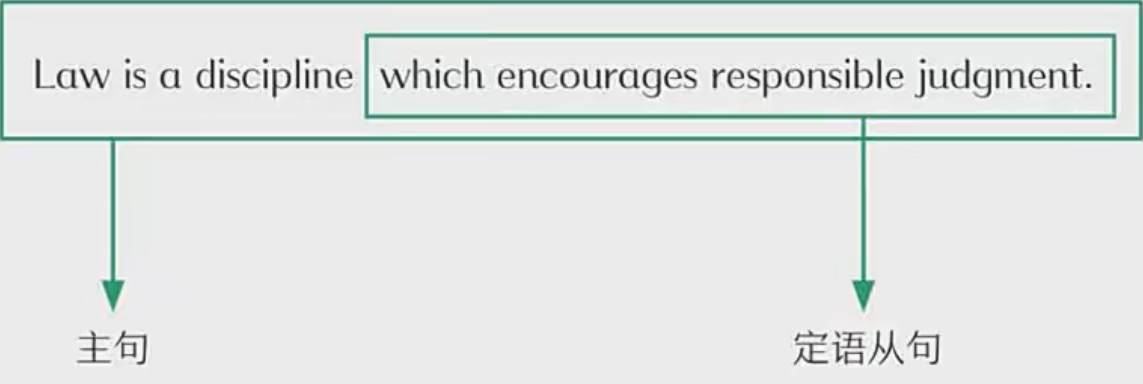
- 核心:一个句子作定语,修饰限定名词,放在所修饰名词后;
- 结构:
- 英语:which 修饰前面的 discipline,放在名词后;
- 中文:法律是一门鼓励...判断的学科;
先行词与关系词
- 举例
- Law is a discipline which encourages responsible judqment.
- 拆分前:
- 1. Law is a discipline.
- 2. A discipline encourages responsible judgment.
- a discipline:先行词,是被修饰的成分;
- which(A discipline):关系词,通过这个词引出了从句的部分;
- 关系词作用
- 1. 引出定语从句;
- 2. 在定语从句中作成分,等于前面的先行词;
13.2 定语从句的使用
13.2.1 定语从句的写法
定语从句的结构
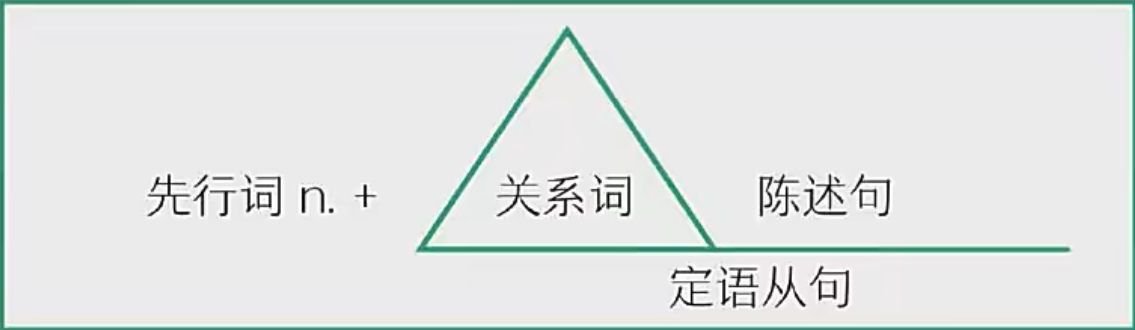
- 位置:放在先行词(n.)之后
- 写法:
- 1. 先写上陈述句,一主一谓,前主后谓;
- 2. 填入合适的关系词,根据先行词找关系词;
- 图示:
13.2.2 先行词和关系词
先行词和关系词选词
- 先行词:事/物
- 关系词:which/that
- 先行词:人
- 关系词:who/whom/that
- 注意:先行词为人,whom 只能在作宾语的时候使用(不能再作主语的时候使用);
- 先行词:人的/物的(表示人或物的所有关系,“某人的/某物的)
- 关系词:whose
- 先行词:时间
- 关系词:when
- 先行词:地点
- 关系词:where
- 注意:where 除了可以表示地点,还可以表示范围;
举例
- 1. 先行词是事/物,关系词选择 which/that;
- Teachers need to be aware of the emotional, intellectual, and physical changes ___ young adults experience.
- 选择 that;老师需要意识到,年轻人需要的改变;
- Furthermore, the legal system and the events which occur withinit are primary subjects for journalists.
- 表示事务的时候,which 和 that 都可以使用;
- 2. 先行词是人,关系词选择 who/whom/that;
- In France, shareholders __ hold onto a company investment forat least two years can sometimes earn more voting rights in acompany.
- 在法国,股东持有公司的股份至少两年的,才可以获得投票权;
- 这里股东是类似于人的对象,并且股东是持有投资,因此是作为主语 -> 使用 who 或者 that ;
- 3. 先行词是人/物,表示人或物的所有关系,关系词选择 whose;
- It also pledged to not deploy Al __ international laws or human rights use would violate.
- AI ... 的使用 -> whose;
- AI 虽然是事务,但是是表达使用,所以也是使用 whose;
- This, for those as yet unaware of such a disadvantage, refers to discrimination against those whose surnames begin with a letterin the lower half of the alphabet.
- 4. 先行词是时间,关系词选择 when;
- It is difficult to the point of impossibility for the average reader under the age of forty to imagine a time ___ high-quality arts criticism could be found in most big-city newspapers.
- 填入 when;
- 5. 先行词是地点,关系词选择 where;
- Today, we live in a world where GPS sustems, digital maps, andother navigation apps are all available on our smartphones.
- 6. 先行词是原因,关系词选择 why;
- The other reason why costs are so high is the restrictive guild-likeownership structure of the business.
13.2.3 定语从句关系词注意事项
- 定语从句中的每一个关系词都必须作成分,包括 that。That 既可以指人又可以指物;
- 定语从句中的先行词是“事/物”时,关系词用 which 和 that 都可以, 不需要区分,因为考研中不考;
- Whom 指人,只能在作宾语时使用; 而 who 和 that 指人,可以作任何成分;
- 关系词在定语从句中作宾语时 (及物动词后的宾语或介词后的宾语),都可以省略;
- 补充:特殊关系词 whereby = by which
13.3 限定性与非限定性定语从句
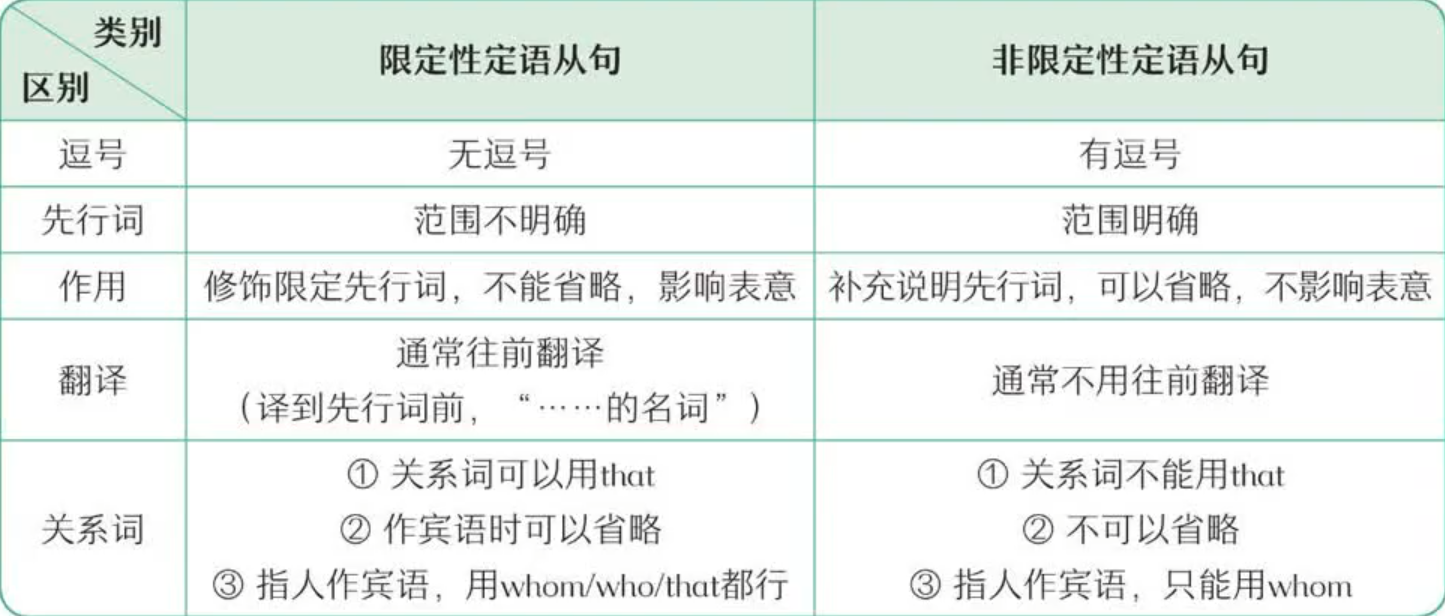
13.3.1 限定性与非限定性定语从句基本概念
举例
- 限定性定语从句:He will call his friend who is working in London.
- 非限定性定语从句(绝对明确):He will call his mother, who is working in London.
- 非限定性定语从句(先行词范围相对明确):This trend, which we believe is still in its infancy, effectivelybegan with retailers and travel providers such as airlines andhotels and will no doubt go further.
分类
- 图示:
13.3.2 补充 1:限定性定语从句与同位语从句
限定性定语从句与同位语从句的区别
- 同位语从句
- 目的:$解释说明:n.$
- 位置:
抽象 n. 后 - 和 that 的关系:n.+that 从句,that 不做从句的成分;
- 限定性的定语从句
- 目的:$限定修饰:n.$
- 位置:
任意 n. 后(抽象或不抽象的n.后都行) - 和 that 的关系:n.+that 从句,that 作从句的成分;
举例
- One possible response is for classical performers to program attractive new music that is not yet available on record.
- music:先行词;
- that:关系词;
- music 不是抽象名词,所以后背接的不是同位语从句,而是定语从句;
- 并且 that 作为成分,所以也可以说明这是定语从句;
- The idea that some groups of people may be more intelligent thanothers is one of those hypotheses that dare not speak its name.
- 这句话当中有两个 that 从句,并且都是跟在名词后 -> 跟在名词后,所以要么是同位语从句,要么是定语从句;
- 第一个 that 是解释说明The idea,所以是同位语从句;
- 第二个 that 做成份,表示... 样的假设,所以是定语从句;
- ... We unconsciously imitate the behavior (that) we see every day.
- 这里的 that 省略;
- 结论:如果出现 $名词 + 主谓$,全部都是定语从句;
13.3.3 补充 2:修饰整句话的定语从句
特殊的非限定性定语从句,补充说明整句话
- 用法:
- 1. 补充说明整句话时,只可以使用 $逗号+which$ 或者 $逗号+as$
- 2. which 只能放在逗号后,as 可以放在前后;
举例
- Most fisheries are well below that, which is a bad way to do business.
- which 是修饰前面整件事情,因此是修饰整句话;
- A few generative rules are then sufficient to unfold the entirefundamental structure of a language, which is why children canlearn it so quickly.
- which 修饰前面整件事;
- 这里面的 which 还可以换成 as;
- Nevertheless, as any biographer knows, a person's early life andits conditions are often the greatest gift to an individual.
- as 指示的是整件事情;
13.3.4 补充 3:介词提前的定语从句
介词提前的定语从句:$介词+whom/which$
- 介词可以提前,也可以不提前;
- 如果介词提前了,则此时关系词只能使用 which:指事务;who:指人
举例
- Grade forgiveness allows students to retake a course which they received a low grade in...
- 原本是在 which 前面作为 in which;
- 介词可以提前:Grade forgiveness allows students to retake a course in which they received a low grade...
- ... Commercial genetic testing is only as good as the reference collections which asample is compared to.
- as ... as:同级比较;
- to 可以提前:commercial genetic testing is only as good as the reference collections to which a sample is compared.
- Television is one of the means by which these feelings arecreated and conveyed...
- by which:通过
13.3.5 内容要点
- 定语从句的概述: 一个句子做定语,修饰限定名词,放在所修饰的名词后;
- 定语从句的写法: 关系词 +陈述句(重点是关系词的选择);
- 定语从句的分类: 限定性定语从句和非限定性定语从句;
- 定语从句的补充
(1)限定性定语从句与同位语从句的区别
(2)特殊的非限定性定语从句 (补充说明整句话)
(3)介词提前的定语从句