Lecture 13: Relative Clauses
Graduate Entrance Examination English study notes: Lecture 13: Relative Clauses. Original examples, diagrams, and exercises are retained.
On this page
13.1 Basic Concepts of Relative Clauses
13.1.1 Modifiers
Relative Clauses and Complex Sentences
- A relative clause is a subordinate clause within a complex sentence;
What is a modifier?
- A modifier adds information about a noun;
- 1. A word or phrase is often enough when little information is needed;
- 2. When more information is needed, a relative clause can be placed after the noun to identify or describe it;
13.1.1 Relative Clause
Basic Concepts of Relative Clauses
- Core: A relative clause follows and modifies an antecedent noun;
- Structure:
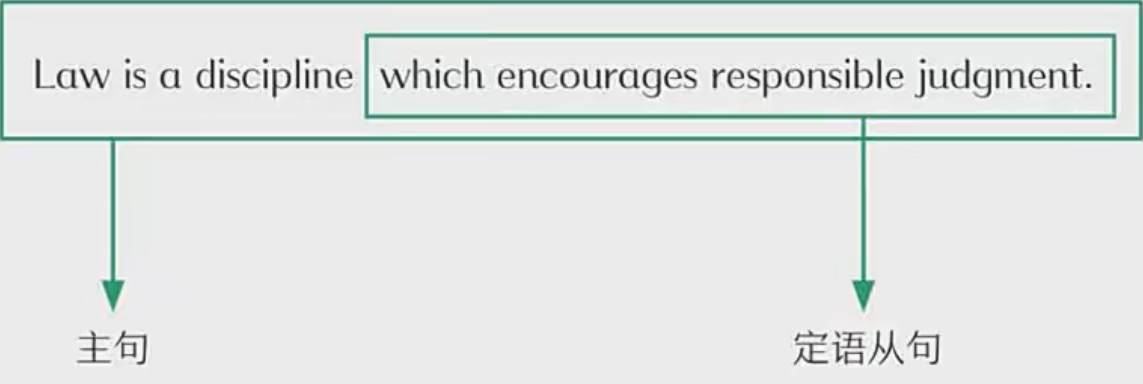
- In English,
whichintroduces a clause that modifies the preceding noundiscipline; - Example: Law is a discipline that encourages responsible judgment.;
Antecedents and Relative Pronouns/Adverbs
- Give an example
- Law is a discipline which encourages responsible judgment.
- Before splitting:
- 1. Law is a discipline.
- 2. A discipline encourages responsible judgment.
a discipline: the antecedent being modified;which: a relative pronoun that refers toa disciplineand functions as the subject of the relative clause;- Functions of relative words
- 1. Introduce the relative clause;
- 2. Perform a grammatical role in the relative clause while referring back to the antecedent;
13.2 Use of Relative Clauses
13.2.1 Writing Relative Clauses
Structure of Relative Clauses
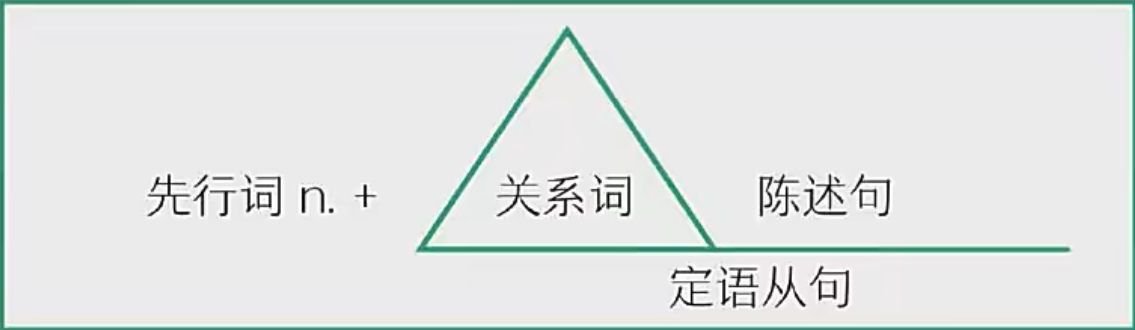
- Position: placed after the antecedent (n.).
- Writing Method:
- 1. Start from two complete clauses that contain the same noun;
- 2. Turn the repeated noun in the second clause into an appropriate relative pronoun or adverb, then place the relative clause after its antecedent;
- Illustration:
13.2.2 Antecedents and Relative Words
Choosing Antecedents and Relative Words
- Antecedent: a thing
- Relative word: which/that
- Antecedent: a person
- Relative words: who/whom/that
- Note:
whomay be a subject or object; formal English useswhomonly as an object; - Antecedent: a person’s or thing’s (indicates all relationships between people or things, "someone's/something's")
- Relative word: whose
- Antecedent: time
- Relative word: when
- Antecedent: place
- Relative word: where
- Note:
wherecan refer to a literal place or to an abstract situation, field, or context;
Examples
- 1. The antecedent is things or objects, and the relative word is which/that;
- Teachers need to be aware of the emotional, intellectual, and physical changes ___ young adults experience.
- Use
thatorwhich: the clause modifieschanges, which functions as the object ofexperience; - Furthermore, the legal system and the events which occur within it are primary subjects for journalists.
- The antecedent
eventsdenotes things, so eitherwhichorthatis possible in a restrictive clause; - 2. The antecedent is 'person', and the relative word is chosen as who/whom/that;
- In France, shareholders who/that hold onto a company investment for at least two years can sometimes earn more voting rights in a company.
- In France, shareholders must have held shares in the company for at least two years to be eligible for voting rights;
shareholdersrefers to people and is the subject ofhold, so usewhoorthat;- 3. The antecedent is people or things, indicating all relationships between people or things; the relational word is 'whose';
- It also pledged not to deploy AI whose use would violate international laws or human rights.
whose usemeans “the use of that AI”;whosecan express possession or association for both people and things;- This, for those as yet unaware of such a disadvantage, refers to discrimination against those whose surnames begin with a letter in the lower half of the alphabet.
- 4. The antecedent is time, and the relative word is chosen when;
- It is difficult to the point of impossibility for the average reader under the age of forty to imagine a time ___ high-quality arts criticism could be found in most big-city newspapers.
- Fill in when;
- 5. The antecedent is 'location', and the relative word is 'where';
- Today, we live in a world where GPS systems, digital maps, and other navigation apps are all available on our smartphones.
- 6. When the antecedent is
reason, the relative adverb may bewhy; - The other reason why costs are so high is the restrictive guild-like ownership structure of the business.
13.2.3 Notes on Relative Words
- Every relative pronoun has a grammatical role in its clause;
thatmay refer to either people or things; - With things, restrictive relative clauses may use
whichorthat. A non-restrictive clause after a comma useswhich, notthat; whomrefers to a person and functions only as an object;whomay function as a subject or object, whilethatmay function as either in a restrictive clause;- When a relative word is used as an object in a relative clause (after a transitive verb or after a preposition), it can be omitted;
- Supplement: Special relational word whereby = by which
13.3 Restrictive and Non-Restrictive Relative Clauses
13.3.1 Basic Concepts
Examples
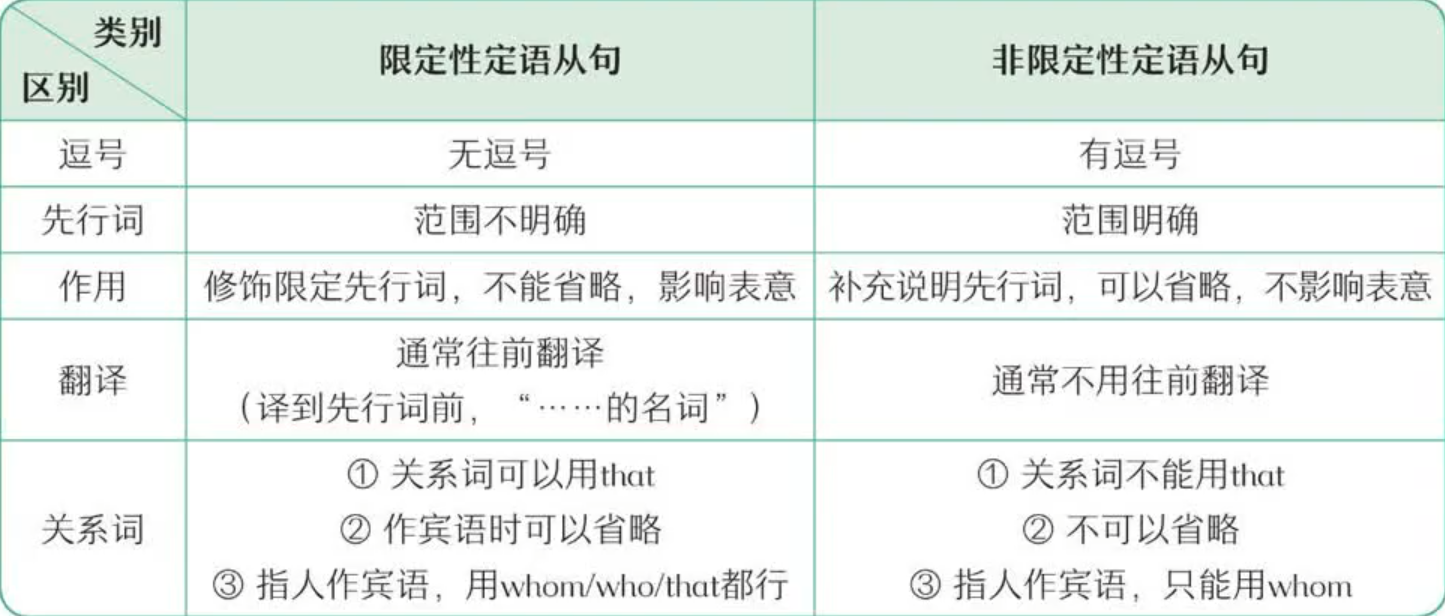
- Restrictive relative clause: He will call his friend who is working in London.
- Non-restrictive relative clause (absolutely explicit):He will call his mother, who is working in London.
- Non-restrictive relative clause (the antecedent is already identified): This trend, which we believe is still in its infancy, effectively began with retailers and travel providers such as airlines and hotels and will no doubt go further.
Category
- Illustration:
13.3.2 Supplement 1: Restrictive Relative Clauses and Appositive Clauses
Differences Between Restrictive and Appositive Clauses
- Appositive clause
- Purpose: $\text{ Explanation }:\,n.$
- Location:
abstract n. - Role of
that: in an appositive/content clause,thatis only a subordinator and has no grammatical role inside the clause; - A restrictive relative clause
- Purpose: identify or describe a noun;
- Position: after the antecedent noun, whether concrete or abstract;
- Role of
that:thatrefers to the antecedent and functions as the subject or object within the relative clause;
Examples
- One possible response is for classical performers to program attractive new music that is not yet available on record.
- music: antecedent;
- that: relative word;
- 'music' is not an abstract noun, so it is followed by a relative clause rather than an appositive clause;
- And 'that' serves as the component, so it can also be shown that this is a relative clause;
- The idea that some groups of people may be more intelligent than others is one of those hypotheses that dare not speak its name.
- This sentence has two 'that' clauses, both followed by the noun -> and then the noun, so it is either an appositive clause or a relative clause;
- The first
that-clause explains the content of the idea, so it is an appositive/content clause; - The second 'that' serves as a component, expressing... such an assumption, so it is a relative clause;
- ... We unconsciously imitate the behavior (that) we see every day.
- The word 'that' here is omitted;
- Conclusion: A
noun + that-clausesequence may be either a relative clause or an appositive/content clause; decide by checking whetherthathas a grammatical role inside the clause;
13.3.3 Supplement 2: Relative Clauses Referring to an Entire Clause
Special non-restrictive relative clauses that comment on the whole preceding clause
- Usage:
- 1. When adding to the whole sentence, only $\text{ Comma }+which$ or $\text{ Comma }+as$ can be used
- 2.
whichnormally follows the clause it refers to;asmay appear before or after the main clause in patterns such asas is known;
Examples
- Most fisheries are well below that, which is a bad way to do business.
- which modifies the entire previous matter, thus modifies the whole sentence;
- A few generative rules are then sufficient to unfold the entire fundamental structure of a language, which is why children can learn it so quickly.
- which modifies the entire previous matter;
- Here,
which is whyis a fixed relationship and cannot simply be replaced withas; - Nevertheless, as any biographer knows, a person's early life and its conditions are often the greatest gift to an individual.
- As indicates the whole thing;
13.3.4 Supplement 3: Preposition Fronting in Relative Clauses
Formal pattern: $\text{preposition}+\text{whom/which}$
- A preposition may be stranded at the end of the relative clause or fronted before the relative pronoun;
- After a fronted preposition, use
whichfor things andwhomfor people—notthatorwho;
Examples
- Grade forgiveness allows students to retake a course which they received a low grade in...
- With preposition stranding,
inremains at the end of the clause; - With preposition fronting: Grade forgiveness allows students to retake a course in which they received a low grade...
- ... Commercial genetic testing is only as good as the reference collections which a sample is compared to.
as ... asexpresses a comparison of equality;- Front
to: Commercial genetic testing is only as good as the reference collections to which a sample is compared. - Television is one of the means by which these feelings are created and conveyed...
- by which: through
13.3.5 Key Points
- Overview: a relative clause follows and modifies an antecedent noun;
- Structure: relative pronoun/adverb + clause; choose the relative word according to the antecedent and its role inside the clause;
- Classification of relative clauses: restrictive relative clauses and non-restrictive relative clauses;
- Supplementation of relative clauses
(1) The difference between restrictive relative clauses and appositive/content clauses
(2) Special non-restrictive relative clauses (supplementary explanation of the entire sentence)
(3) Relative clauses with a fronted preposition