Chapter 0: Mathematical Fundamentals — Advanced Mathematics - Collection of Formulas
Chapter 0: Mathematical Fundamentals from the formula collection, kept as a focused chapter for faster reading and image loading.
On this page
Chapter 0: Mathematical Fundamentals
0.1 Function operations
0.1.1 Trigonometric Functions
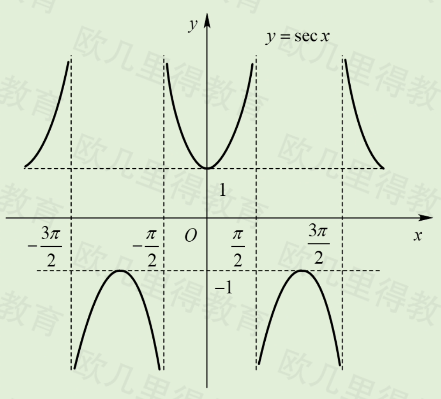
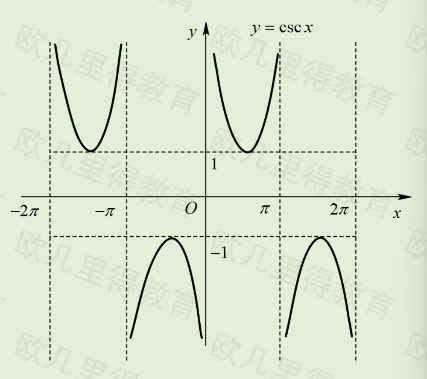
secx and cscx
- range:$(-\infty,-1]\cup[1,+\infty)$
- Value: Calculate using the reciprocals of $\cos x$ and $\sin x$
- Image:
Inverse Trigonometric Functions
- Concept:
- Note:
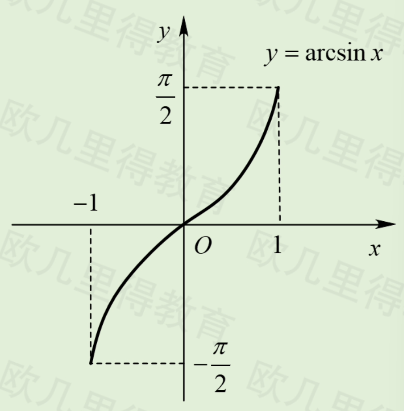
- The inverse sine function is not the inverse function of $y=\sin x$ across the entire domain; note the range of $y=\arctan x$;
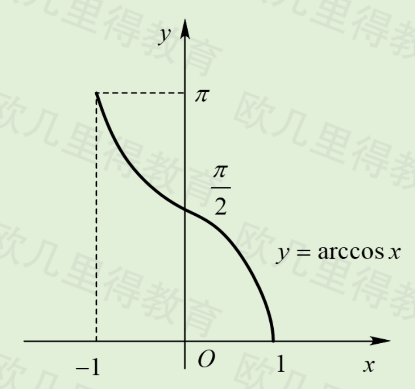
- It is merely the inverse function of $y=\sin x$ on $\left[-\frac\pi2,\frac\pi2\right]$; solving inverse functions over other intervals requires the identity transformation to translate onto $\left[-\frac\pi2,\frac\pi2\right]$ to be represented. The inverse cosine function is similar;
- Relationship:
arcsinxandsinx - At $\left[-\frac\pi2,\frac\pi2\right]$, from the inverse function $f^{-1}[f(x)]=x$, we know: $arc\sin(\sin x)=x$
- At $\left[-\frac\pi2,\frac\pi2\right]$, from the inverse function $f[f^{-1}(x)]=x$, we know: $\sin(\arcsin x)\equiv x$
- Example: Using the identity transformation to translate x:
- Find $\arcsin (\sin x),x\in(\frac{3}{4}\pi,\pi)$
- Use the identity $\sin x=\sin(\pi-x)$, which moves the angle into $(0,\frac{\pi}{4})$, where the inverse-function identity applies.
- Get $$\arcsin (\sin x)=\arcsin(\sin(\pi-x))=\pi-x, x\in (\frac{3}{4}\pi,\pi)$$
arcsinx:- range:$\left[-\frac{\pi}{2},\frac{\pi}{2}\right]$
arccosx:- range:$[0,\pi]$
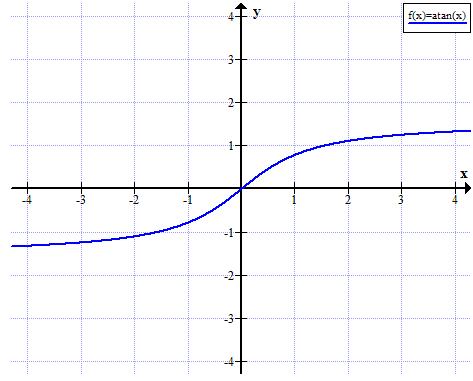
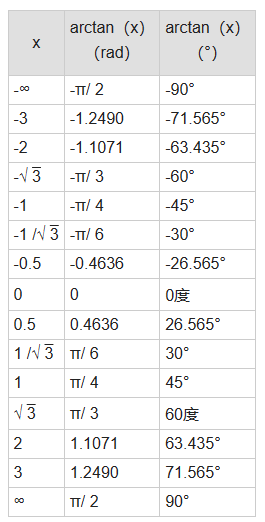
Supplement: Definition of $\arctan$
- $\tan(\arctan x)= x$
- Illustration
- Table
Basics of Trigonometric Functions
- Sum and Difference Formula:
- Formula:
- $$\begin{aligned}&\sin\left(x\pm y\right)=\sin x\cos y\pm\cos x\sin y\\&\cos\left(x\pm y\right)=\cos x\cos y\mp\sin x\sin y\\&\tan\left(x\pm y\right)=\frac{\tan x\pm\tan y}{1\mp\tan x\tan y}.\end{aligned}$$
- Common conclusions:
- $$\sin x+\cos x=\sqrt{2}\sin\left(x+\frac{\pi}{4}\right)$$
- $$\sin(n\pi+\alpha)=(-1)^n\sin\alpha$$
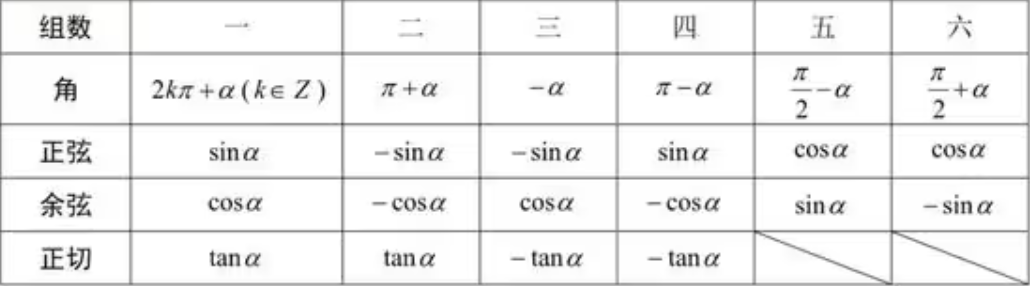
- Induction formula:
- Reciprocal relationship:
- $$\tan\alpha\cot\alpha=1、\sin\alpha\csc\alpha=1、\cos\alpha\sec\alpha=1$$
- Quotient relationship:
- $$\tan\alpha=\frac{\sin\alpha}{\cos\alpha}、\cot\alpha=\frac{\cos\alpha}{\sin\alpha}$$
- Square relation:
- $$ \sin^{2}\alpha+\cos^{2}\alpha=1、1+\tan^{2}\alpha=\sec^{2}\alpha、1+\cot^{2}\alpha=\csc^{2}\alpha$$
- Double angle formula:
- $$\sin2\alpha=2\sin\alpha\cos\alpha$$
- $$\cos2\alpha=\cos^2\alpha-\sin^2\alpha=2\cos^2\alpha-1=1-2\sin^2\alpha$$
- $$\tan2\alpha=\frac{2\tan\alpha}{1-\tan^2\alpha}=\frac{2\cot\alpha}{\cot^2\alpha-1}=\frac{2}{\cot\alpha-\tan\alpha}$$
- half-angle formula:
- Demotion and promotion
- Lowering formula:
- $$\cos^{2}\alpha=\frac{1+\cos2\alpha}{2},\quad\sin^{2}\alpha=\frac{1-\cos2\alpha}{2},\quad\tan^2\alpha=\frac{1-\cos2\alpha}{1+\cos2\alpha}$$
- Promotion formula:
- $$1+\cos2\alpha=2\cos^2\alpha,1-\cos2\alpha=2\sin^2\alpha, 1\pm\sin2\alpha=\left(\sin\alpha\pm\cos\alpha\right)^2$$
- $\cos x$ $1$ Characteristics:
- Example: $$1-\cos x=1-(\cos 2*\frac{x}{2})=1-(1-2\sin^2 \frac{x}{2})=2\sin^2 \frac{x}{2}$$
- Inverse trigonometric function:
- If $x=a\sin t$, then $t=\arcsin\frac{x}{a}$.
- If $x=a\sec t$, then $t=\arccos\frac{a}{x}$.
Collection of Trigonometric Differentiations
- Sine and Cosine:
- $$(\sin x)^{\prime}=\cos x、(\cos x)^{\prime}=-\sin x$$
tan、cot、sec、csc:- $$\begin{aligned}(\tan x)^{\prime}&=\sec^2x&(\cot x)^{\prime}&=-\csc^2x\\\\(\sec x)^{\prime}&=\sec x\tan x&(\csc x)^{\prime}&=-\csc x\cot x\end{aligned}$$
- Inverse trigonometric function:
- $$\begin{aligned}&(\arcsin x)^{\prime}=\frac1{\sqrt{1-x^2}}&&(\arccos x)^{\prime}=-\frac1{\sqrt{1-x^2}}\\&(\arctan x)^{\prime}=\frac1{1+x^2}&&(\operatorname{arccot}x)^{\prime}=-\frac1{1+x^2}\end{aligned}$$
0.1.2 Polar Coordinates
Basic Concepts of Polar Coordinates
- Transformation:
- $$\left\{\begin{array}{c}x=r\cos\theta\\y=r\sin\theta\end{array}\right.\Leftrightarrow\left\{\begin{array}{c}r=\sqrt{x^2+y^2}\\\theta=\operatorname{atan2}(y,x)\end{array}\right.$$
- Note: The above conversion method is limited to the case where the two origins are the same, and the polar coordinates reference system and the $x$ axis direction of the Cartesian coordinates are the same;
Common Forms of Polar Coordinates Functions
- Ray
y=kx, its polar coordinate equation: $\theta=\theta_0$ - A circle with center at the origin and radius
a: $r=a$ - A circle with center
(a,0)and radiusa: $r=2a\cos\theta$ - A circle with center
(0,a)and radiusa: $r=2a\sin\theta$
0.1.3 Parametric Equations
Parametric Equations
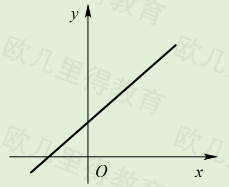
- Straight line:
- Format:
- $y=k(x-x_{0})+y_{0}$
- Parametric Equations:
- $\begin{cases}x=x_0+t\cos\alpha\\y=y_0+t\sin\alpha\end{cases}$
- Illustration:
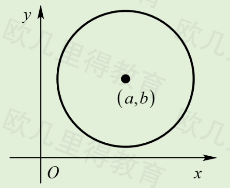
- Circle:
- Format:
- $(x-a)^2+(y-b)^2=r^2$
- Parametric Equations:
- $\begin{cases}x=a+r\cos t\\y=b+r\sin t\end{cases}$
- Illustration:
Common Parametric Equations in Elementary Mathematics
Common Parametric Equations and Their Graphs
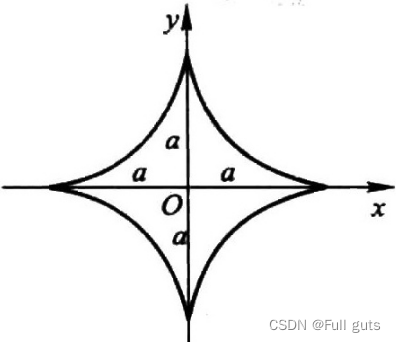
- Star line
- General formula $$x^{\frac23}+y^{\frac23}=a^{\frac23}$$
- Parametric equations $$\begin{cases}x=a\cos^3\theta\\y=a\sin^3\theta\end{cases}$$
- Image:
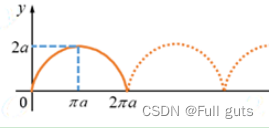
- Cycloid
- $$\text{ Parametric equations }\begin{cases}x=a (\theta-\sin\theta)\\y=a (1-\cos\theta)\end{cases}.$$
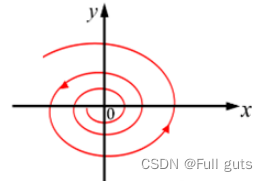
- Logarithmic threads:
- $$\rho=a\mathrm{e}^{\theta}$$
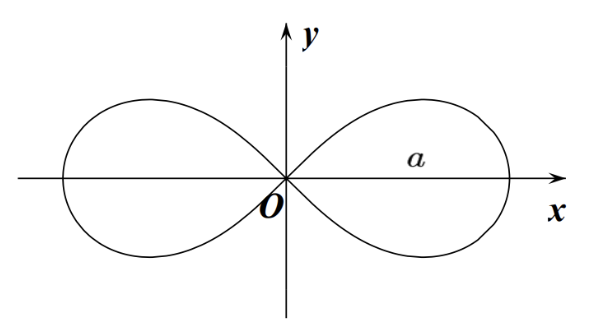
- Double twisted wire
0.1.4 Logarithm and Exponent
Logarithmic Operation Rules
- $$log_a(mn)=log_am+log_an$$
- Note: $\log_2(m+n)$ cannot be split into a sum or product of $\log_2m$ and $\log_2n$; only products and quotients can be expanded using the rules above.
- $$log_am^n=nlog_am$$
- $$log_a\left(\frac{m}{n}\right)=log_am-log_an$$
- $$log_a\sqrt[n]{m}=\frac{1}{n}log_am$$
- $$\log_ab=\frac{\log_cb}{\log_ca}$$
- $$u^v=\mathrm{e}^{v\ln u}\left(u>0\right)$$
Exponential Operation Rules
Logarithmic and Exponential Operations
- Take logarithms on both sides of the equation:
- Function: Take logarithms at the same time, eliminate the exponents, and get the logarithms
- $$y=(x+1)^{3}(x-2)^{2}\rightarrow lny=3ln(x+1)+2ln(x-2)$$
- Taking exponents on both sides of the equation:
- Function: At the same time, take the index, eliminate the logarithm, and get the index
- $$y=\ln\left(x+{\sqrt{x^{2}+1}}\right)\rightarrow e^y=x+\sqrt{x^2+1}$$
0.1.5 Elementary Functions
Square, Cube, Multiple Formulas
- The sum of the three terms:
- $$\left(a+b+c\right)^2=a^2+b^2+c^2+2ab+2ac+2bc$$
- Perfect cube sum and difference:
- $$\begin{aligned}\left(a+b\right)^3&=a^3+b^3+3a^2b+3ab^2\\\left(a-b\right)^3&=a^3-b^3-3a^2b+3ab^2\end{aligned}$$
- Binomial Theorem:
- $$\begin{aligned}&\left(a+b\right)^{n}=\sum_{k=0}^{n}\mathrm{C}_{n}^{k}a^{n-k}b^{k}=a^n+\mathrm{C}_n^1a^{n-1}b+\cdots+\mathrm{C}_n^{n-1}ab^{n-1}+b^n\end{aligned}$$
Rationalizing Numerators and Denominators
- Physics and chemistry
->Remove radicals from the numerator or denominator - numerators have physical chemistry:
- Multiply the numerator and denominator by the conjugate radical of its numerator;
- Example: $$f(x)=\frac{\sqrt{x+1}-\sqrt{x-1}}{x}=\frac{(\sqrt{x+1}-\sqrt{x-1})*(\sqrt{x+1}+\sqrt{x-1})}{x(\sqrt{x+1}+\sqrt{x-1})}=\frac{2}{x\cdot(\sqrt{x+1}+\sqrt{x-1})}$$
- Here $\sqrt{x+1}+\sqrt{x-1}$ is the conjugate of $\sqrt{x+1}-\sqrt{x-1}$.
- Rationalizing the denominator:
- The method is the same as the rationalization of the numerator, multiply the numerator and denominator by the conjugate radical of its denominator;
- Rationalizing both the numerator and denominator:
- First multiply by the conjugate of the radical in the numerator, then by the conjugate of the radical in the denominator.
Partial-Fraction Decomposition
- Method:
- Step 1: Express the fraction as a sum of simpler fractions with unknown coefficients such as $A$ and $B$.
- Step 2: Put the fractions over a common denominator and expand the numerator.
- Step 3: Compare coefficients with the original numerator and solve for $A$ and $B$.
- Example:
- $$\text{Decompose }\quad\frac{x}{x^2-5x+6}.$$
- $$\frac{x}{x^2-5x+6}=\frac{x}{(x-2)(x-3)},\qquad \text{let }\frac{x}{(x-2)(x-3)}=\frac{A}{x-2}+\frac{B}{x-3}.$$
- Combining the fractions gives $$\frac{\text{A}(x-3)+\text{B}(x-2)}{(x-2)(x-3)}=\frac{(\text{A+B})x-3\text{A}-2\text{B}}{(x-2)(x-3)}.$$
- Comparing coefficients gives $$\left.\left\{\begin{array}{c}\left(1\right)\mathrm{A}+\mathrm{B}=1\\\left(2\right)\mathrm{3A}+2\mathrm{B}=0\end{array}\right.\right.$$
- Thus
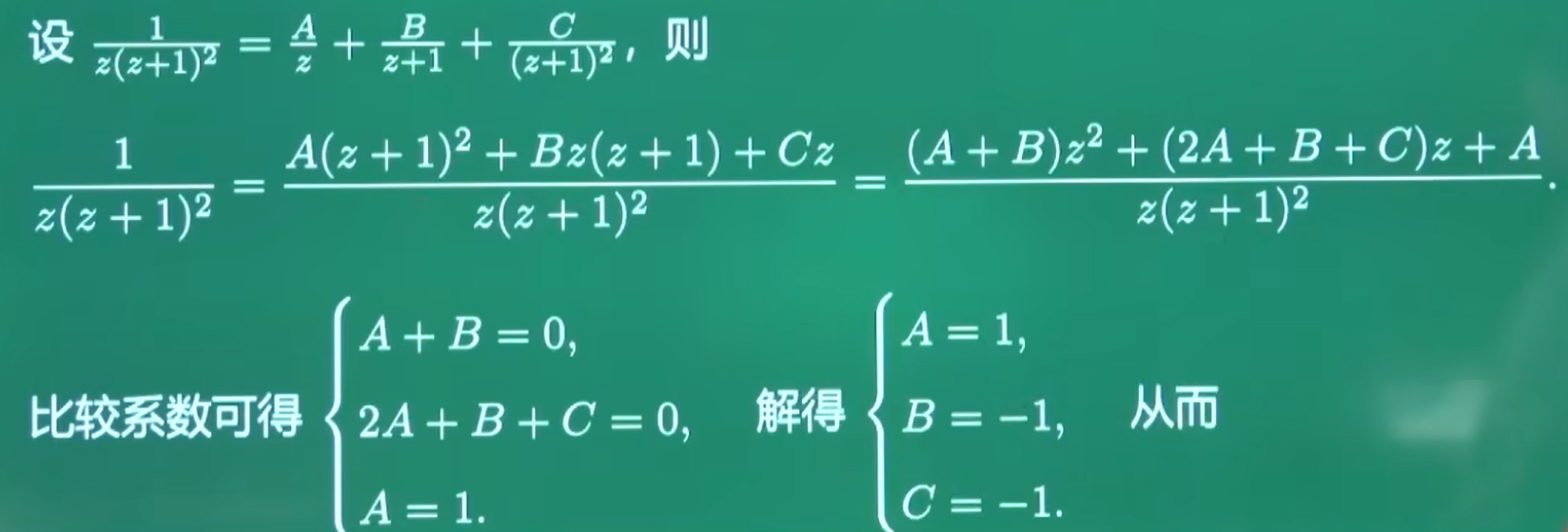
B=3andA=-2, so $$\frac{x}{x^2-5x+6}=-\frac{2}{x-2}+\frac{3}{x-3}.$$ - Example 2:
Add, Subtract, Split
- Purpose:
- Simplifying polynomial fractions;
- Method:
- Perform polynomial division from the highest-degree term downward until the degree of the remainder is less than the degree of the denominator.
Quadratic Equations in One Variable
- To $ax^2+bx+c=0\left(a\neq0\right)$:
- $\triangle = b^2- 4ac> 0\Leftrightarrow$ The equation has two distinct real roots;
- $\triangle = b^2- 4ac= 0\Leftrightarrow$ The equation has two equal real roots;
- $\bigtriangleup=b^2-4ac<0\Leftrightarrow$ The equation has a pair of conjugate roots
- Root Formula:
- $$x_{1,2}=\frac{-b\pm\sqrt{b^2-4ac}}{2a}$$
Solving the cubic equation
- Step 1: Rewrite the equation in the form of $x^3+bx^2+cx+d=0$;
- Step 2: Guess the roots, and based on
d, guess which product of the three numbers it can be decomposed into; - Step 3: Organize and factorize
->first organize it into $(x-x_0)\left(x^2+px+q\right)=0$, solve $x^2+px+q=0$, and get two more roots;
Conclusion
- arctangent function:
- $$\arctan x+\arctan\frac1x\equiv\frac\pi2(x>0).$$
- The following index is written directly:
- $$(-1)^{2n}=1\quad\quad(-1)^{2n-1}=-1$$
- As $n\to\infty$, $(-1)^{n-3}=(-1)^{n-1}$.
- $$x^n-1=(x-1)(x^{n-1}+x^{n-2}+\cdots+x+1)$$
0.2 Geometric Foundations
0.2.1 Straight Line
Common Forms of Straight Lines
- Point-slope form: $$y-y_0=k\left(x-x_0\right)$$
- Two-point form: $$y-y_1=\frac{y_2-y_1}{x_2-x_1}\left(x-x_1\right)\rightarrow \frac{y-y_1}{y_2-y_1}=\frac{x-x_1}{x_2-x_1}.$$
- Standard form: $$Ax+By+C=0$$
Formula for the distance from point to straight line
- Distance formula:
- $$d=\frac{|Ax_1+By_1+C|}{\sqrt{A^2+B^2}}$$
Normal, Tangent
- Tangent equation: $y-y_{0}=f^{\prime}(x_{0})(x-x_{0})$
- Normal equation: $y-y_0=-\frac1{f^{\prime}(x_0)}(x-x_0)$
0.2.2 Circles and Ellipses
Circles and Their Standard Forms
- Standard form: $$(x-a)^2+(y-b)^2=R^2$$
- Perimeter: $$2\pi R$$
- Area: $$\pi R^2$$
- Surface area of a sphere: $$S=4\pi R^2$$
- Volume of a sphere: $$\frac{4}{3}\pi R^3$$
Volume of the Cone
- S is the base area of the cone, H is the height of the cone, then:
- $$V_{\text{cone}}=\frac{1}{3}SH$$
- If the radius of the base of the cone is R, then:
- $$V_{\text{cone}}=\frac{\pi}{3}R^2H$$
Ellipses and Their Areas
- Elliptic equation: $$\frac{x^2}{a^2}+\frac{y^2}{b^2}=1$$
- Eccentric ellipse equation:
- Shift m along the x-axis, shift n along the y-axis
- $$\frac{\left(x-m\right)^2}{a^2}+\frac{\left(y-n\right)^2}{b^2}=1$$
- Elliptical area: $$S=\pi ab$$
0.2.3 Area of a triangle
Concept: Two formulas for the area of a triangle
- Let
x,y, andzbe the three side lengths, letybe the chosen base, lethbe the corresponding height, and let the perimeter be2p. - $$S=\sqrt{p(p-x)(p-y)(p-z)}=\frac12yh$$
0.2.4 Volume
Concept
- Tetrahedral volume:
- $$V_{\text{tetrahedron}}=\frac{1}{3}S_{\text{base}}h$$
0.3 Sequences and Mathematical Induction
0.3.1 Summing Sequences
Arithmetic and Geometric Sequences
- Summation of arithmetic sequences: $$s_n=\frac{(a_1+a_n)n}{2}$$
- Summing geometric sequences: $$s_n=\begin{cases}na_1,\quad(q=1),\\\frac{a_1(1-q^n)}{1-q},\quad(q\neq1).\end{cases}$$
Common Summation Conclusions
- $$\sum_{k=1}^{1}\frac{1}{4k^{2}-1}=\frac{1}{2}\sum_{k=1}^{n}(\frac{1}{2k-1}-\frac{1}{2k+1})=\frac{1}{2}(1-\frac{1}{2k+1})$$
- $$\sum_{k=1}^{n}k=\frac{1}{2}n(n+1)$$
- $$\sum_{k=1}^{n}k^{2}=\frac{1}{6}n(n+1)(2n+1)$$
0.3.2 Mathematical Induction
First Mathematical Induction
- The first mathematical induction method is suitable for propositions involving recurrence that only involve $a_1$ and $a_n$ terms, with the following steps:
- (1) Verify that the proposition is correct when
n=1is valid; - Substitute
n=1into the left and right sides of the equation to see if it holds; - (2) Assume the proposition is correct when
n=k; - Set up any number
k, and assume the currentkisn, then substitute it into the left and right sides of the expression; - (3) Prove that the proposition is correct at
n=k+1 - Take
n=k+1, substitute it into the left side (summation expression) and the right side of the equation, and organize it into the form of an equationn=k+1;
Second Mathematical Induction
- Example:
- Let $D_n= 2aD_{n- 1}- a^{2}D_{n- 2}$, $D_{1}= 2a$, $D_2=3a^2\left(a\neq0\right)$, and use mathematical induction to prove: $D_n=\left(n+1\right)a^n.$
- The second mathematical induction method is suitable for recursive propositions involving $a_{n-1}$, $a_n$, and $a_{n+1}$, with the following steps:
- (1) Verify that the propositions at
n=1andn=2are correct; - When $n=1$ $D_1=2a=\left(1+1\right)a^{1}$,
- When $n=2$, $D_2= ( 2+ 1) a^2$, the proposition holds,
- (2) Assume the proposition is correct when
n<k; - Assume $n<k$ and that $D_n=(n+1)a^n$ holds.
- (3) Proving that the proposition is correct when
n=kis proven; - Then when
n=k, $\begin{aligned}&D_k=2aD_{k-1}-a^2D_{k-2}=2a\left(ka^{k-1}\right)-a^2\left[\left(k-1\right)a^{k-2}\right]\end{aligned}=\begin{pmatrix}k+1\end{pmatrix}a^k.$ - It can be determined by mathematical induction;
0.4 Other Knowledge
0.4.1 Complex Numbers
Concept
- Complex number: for real numbers $x$ and $y$, $z=x+iy$ is a complex number.
- Basic relation: $$i^2=-1,\qquad i\text{ is the imaginary unit}.$$
- Example: $\sqrt{-4}=2\sqrt{-1}=2i$
0.4.2 Physical Application
0.4.3 Common inequalities
Basic Inequalities
- Multiplication and square root principles:
- $$(\text{ Multiplication rule })a>b>0\Rightarrow a^{n}>b^{n}(n\in N,\text{ and }n>1) ;$$
- $$\\(\text{ Opening the rules })a>b>0\Rightarrow\sqrt[n]{a}>\sqrt[n]{b}(n\in N,\text{ and }n>1)$$
- Basic inequalities:
- $$a^2+b^2\geq2ab,\qquad\text{with equality iff }a=b.$$
- $$\frac{a+b+c}3\geq\sqrt[3]{abc} (a,b,c\in R^+)$$
Common Inequalities in Advanced Mathematics
- Absolute value inequality:
- $$-|x|\leqslant x\leqslant|x|$$
- $$|a|-|b|\leq|a\pm b|\leq|a|+|b|$$
- $$|\sin x|\leqslant1$$
- Common Other Inequalities:
- $$\begin{aligned}&(1)\ |\sin x|\leq |x|,\quad \forall x\in\mathbb{R},\ \text{with equality at }x=0;\\&(2)\ |x|\leq|\tan x|,\quad \forall x\in\left(-\frac{\pi}{2},\frac{\pi}{2}\right),\ \text{with equality at }x=0;\\&(3)\ \frac{x}{1+x}\leq\ln(1+x)\leq x,\quad \forall x\geq0.\end{aligned}$$
- $$\ln n<\sqrt n$$
- Integral inequality:
- $$f(x){\leqslant}g(x)\text{ , then }\int_a^bf(x)dx{\leqslant}\int_a^bg(x)dx .$$
- $$\left|\int_a^bf(x)dx\right|\leqslant\int_a^b\left|f(x)\right|dx(a<b)$$
- $\text{ Let }M\text{ and }m\text{ They are functions }f(x)\text{ In the interval }[a,b]\text{ The maximum and minimum values on the \_ }$
- $$\\m(b-a)\leqslant\int_a^bf(x)dx\leqslant M(b-a)(a<b)\text{ (Integral Valuation Theorem) }$$