Lecture 3: Modality and Voice of Finite Verbs
Graduate Entrance Examination English study notes: Lecture 3: Modality and Voice of Finite Verbs. Original examples, diagrams, and exercises are retained.
On this page
3.1 Modality of Finite Verbs
3.1.1 What is verb modality?
What is Modality?
- Modality expresses possibility, necessity, permission, ability, willingness, prediction, or the speaker's attitude;
- Core pattern: modal verb + base form of the lexical verb;
Common Modal Verbs
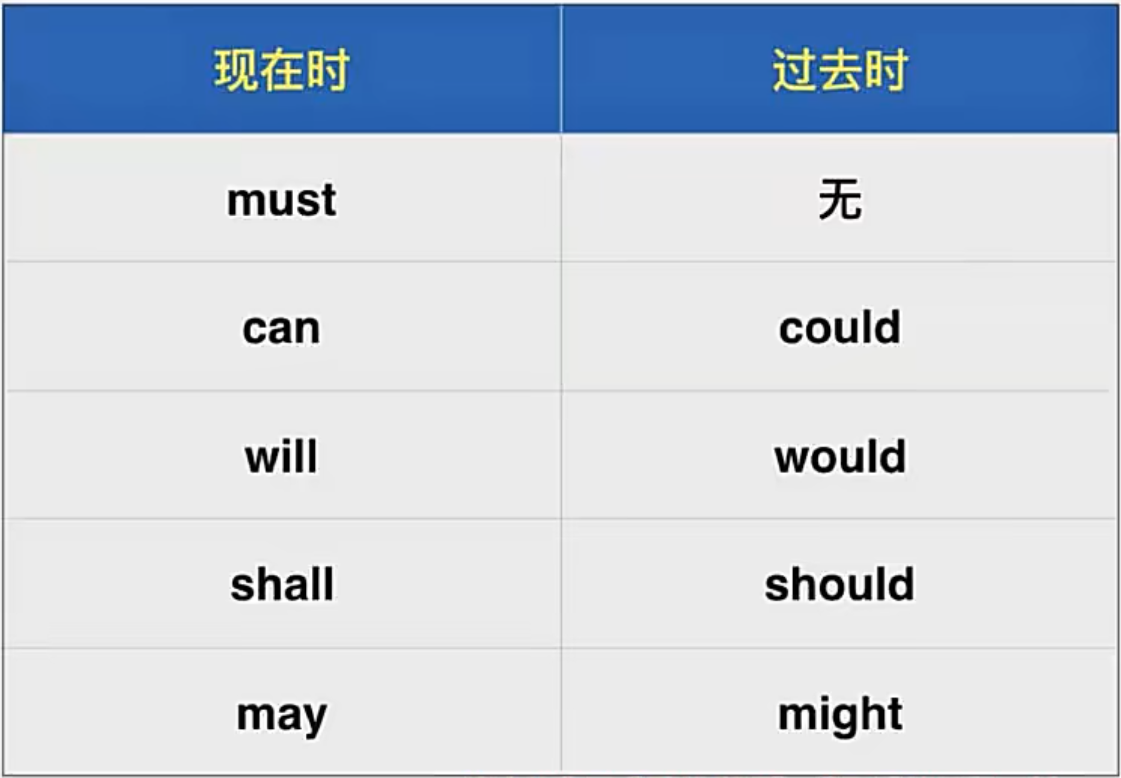
3.1.2 How to Use Modal Verbs
Common Features
- Features:
- 1. A modal is followed by the base form of the lexical verb;
- 2. Do not use
am/is/areafter a modal; use the base formbewhen needed; - 3. The tense change of modal verbs is limited;
- Common verbs have multiple tenses;
- Modal verbs generally have only two tenses: present and past;
- 4. Modal verbs do not change with person or number
- No third-person verb inflection
- 5. Modal verbs become negative or questioning (frequently tested)
- Negative: add
notafter the modal; - Question: place the modal before the subject;
- Give an example
- i can do something and i could do something
Usage
- Words: could, would, should, might
- Meaning 1: Indicates the past;
- Meaning 2: Indicates the present, but in a more euphemistic tone or polite tone;
- can you help me and could you help me
- Meaning 3: Used in subjunctive mood
3.1.3 Usage 1: What kind of emotional attitude to express
Usage 1: must
- Meaning:
- Strong emotional attitude
- Must
- Example:
- we must also act with caution.
- We must also act cautiously;
Usage 2: can/could
- Meaning
- 1. Being able to do something;
- 2. Being able to do something, indicating permission;
- Give an example
- Could a hug a day keep the doctor away?
- Can a hug a day keep doctors away from me?
Usage 3: will/would
- Meaning
- 1. In the future tense, it indicates that it will be;
- 2. Expressing a willingness;
- Example:
- Will you marry me?
- Would you marry me?
- The first draft will appear on the page...
Usage 4: May/Might
- Meaning
- 1. Permission;
- 2. Possibility;
- Give an example
- expressions may influence emotion rather than just the other way around.
Usage 5: should
- Meaning
- Indicates that it should be;
- Give an example
- Those suffering from persistent nightmares should seek help from a therapist.
3.1.4 Usage 2: Indicates speculation or possibility
Modal verbs can express different degrees of certainty
Modal verb + do
- Distinction:
must: strong logical conclusion;may,might,could: possibility;should: expectation;can't/cannot: strong conclusion that something is impossible or untrue;- Give an example
- The details may be unknowable...
- These details may be unknown;
may beis a modal verb plus the base formbe;maybeis a single adverb meaning “perhaps”;- It might be poetic, philosophical, sensual, or mathematical, but in any case it must… have something to do with the soul of the human being.
- Two modal verbs that are speculated but have different possibilities;
Modal Verbs and Speculation
- Present-state inference: modal + base form;
- Inference about an action in progress: modal +
be doing; - Now something similar could be happening in the oceans.
- Now some similar things are happening in the ocean;
- Inference about the past: modal +
have done must have doneexpresses a strong conclusion about a past event;- She must have cried. / She must be crying.
Additional Modal Verb Phrases
- have to: must, have to do it;
- They have to be careful not to come across as disappointed in their child
- They must be careful not to show disappointment on the child's face;
- ought to: also indicates that something should be done;
3.2 Past-Paper Practice
Question:Online education can supplement the traditional kind
- Online education can supplement traditional education;
Question:He must store a large quantity of grain instead of consuming all his grain immediately
- must: must
- He must store large amounts of grain rather than consume it;
Question:This could add value to their businesses in three ways
couldexpresses a possible benefit;
Title:Upcoming reforms might bring the price to a more reasonable level
- Maybe, can;