Lecture 2: Tenses of Finite Verbs
Graduate Entrance Examination English study notes: Lecture 2: Tenses of Finite Verbs. Original examples, diagrams, and exercises are retained.
On this page
2.1 Changes in finite verbs
Concept: Finite verb inflection
- Three dimensions:
- Tense
- Modality
- Voice
- Negation:
- Affirmative vs. negative form
- Emphasis:
- Emphatic
do/does/did - Note:
- A finite verb phrase may contain several words, but the entire phrase functions as one predicate;
2.2 Tense of finite verbs
This part is the most important, because every finite verb must have a tense
2.2.1 What is Tense?
The Concept of Tense
- In this course, a tense form is analyzed as time reference + aspect;
How to represent tense?
- Tense and aspect are expressed through the form of the finite verb phrase;
How many tenses are there in total?
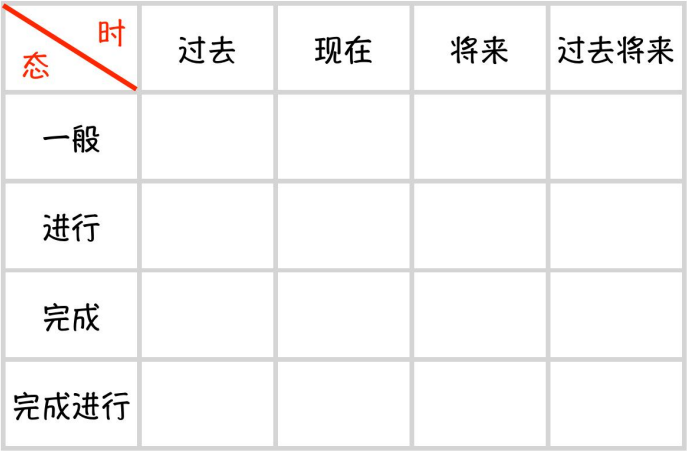
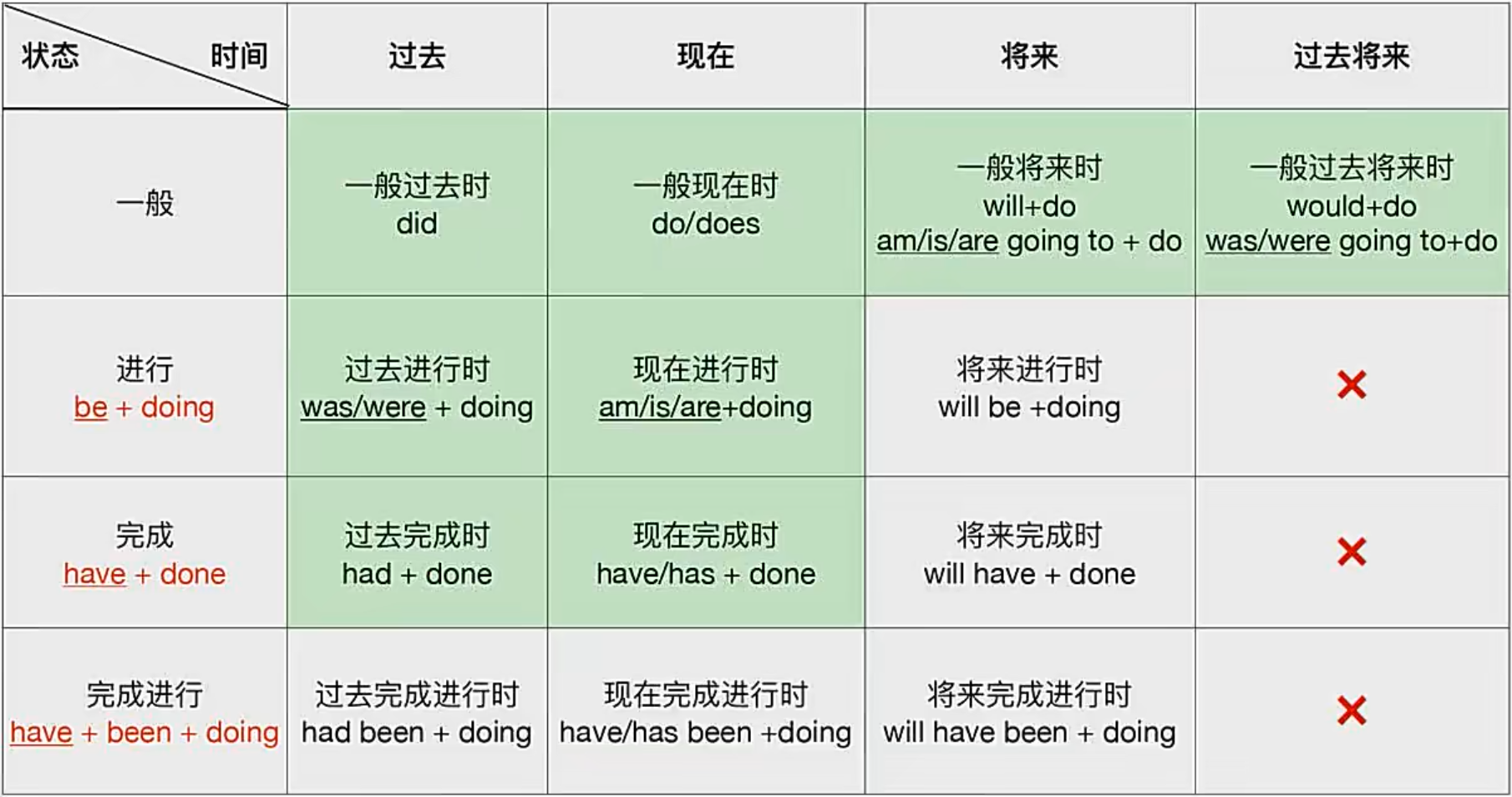
- Traditional teaching combines four time references with four aspects to present sixteen forms;
- Illustration:
2.2.2 How to Choose Tense
Analysis Method: Two Steps -> First time, then state
- First, analyze the timing of the action;
- Reanalyze the state in which the action occurs;
2.2.3 Eight Core Tenses
2.2.3.1 Simple Tenses
- The simple aspect does not mark an event as progressive or perfect;
Simple Past Tense
- Finite verb = $did$
- Meaning: actions that happened in the past, things that happened entirely in the past;
Simple Present Tense
- Finite verb = $do/does$
- Meaning:
- 1. Present states and general truths;
- 2. Habits, repeated events, and regular occurrences;
- Which subjects use the third person singular?
he,she, orit;- A singular uncountable noun;
- A singular countable noun;
- Example:
- The goal is new-search, not re-search.
- Each year researchers publish millions of papers in more than 30000 journals
- Because every year new papers are published
->at a certain frequency, continuously->Therefore, here is the simple present tense;
Simple Future
- Finite verb = $shall + do\text{ or } will + do \text{ or } am、is、are + going + to + do$
- Meaning:
- 1. Refers to an event or state after the present;
- 2.
willandbe going tocan differ in context: - am, is, are going to do: pre-planned;
- Will do: a last-minute decision (Will carries emotional willingness, indicating willingness);
- 3.
shallis uncommon in modern general usage and is rarely tested; - Example:
- The problems will be different.
Future in the Past
- Finite verb = $would+do \text{ or } was、were + going + to + do$
- Meaning:
- 1. Describes a future event viewed from a past reference point;
- 2. It often appears with a simple-past reporting or narrative verb;
- Example:
- They gave justices permanent positions so they would be free to upset those in power...
gave: simple past;would be: future in the past, viewed from the time when the positions were granted;
2.2.3.2 Progressive tense
Progressive Tense
- Indicates that it is ongoing or actually underway;
- All are $be+doing$
Past Continuous Tense
- Meaning: An action was in progress at a past time;
- Finite verb = $was、were + doing$
- Example:
- He was searching for tiny engraved seals...
- The search was ongoing at the relevant past time;
Present Continuous Tense
- Meaning: An action or situation is in progress around the present;
- Finite verb = $am、is、are + doing$
Future Tense
- Meaning:
- 1. Very few are tested;
- 2. Events that are ongoing or will happen at some point in the future;
- Finite verb = $will+be+doing$
2.2.3.3 Perfect Tense
What the Perfect Aspect Expresses
- The perfect relates an earlier situation to a later reference point;
- It may describe a completed event, a resulting state, or a situation continuing up to the reference time;
Unified Formula for Perfect Tense
- Finite verb = $have + done$
Past Perfect Tense
- Meaning: Standing at a point in the past, looking before
->Standing in the past looking before; - Core: Standing in the past, looking at past events;
- Present - (Past - Past of the Past) < - The content of this time period;
- Finite verb: $had + done$
- Example:
- The interviewers had rated applicants on a scale of one to five.
- The ratings occurred before another past reference point in the context;
- he expressed the opinion that in two or three respects his mind had changed during the preceding twenty.
- Ideas have already changed before expressing their views;
- Simple past tense VS past perfect tense
- Similarities
- All represent actions that occurred in the past;
- Difference
- Simple past locates an event in the past;
- Past perfect locates an event before another past reference point;
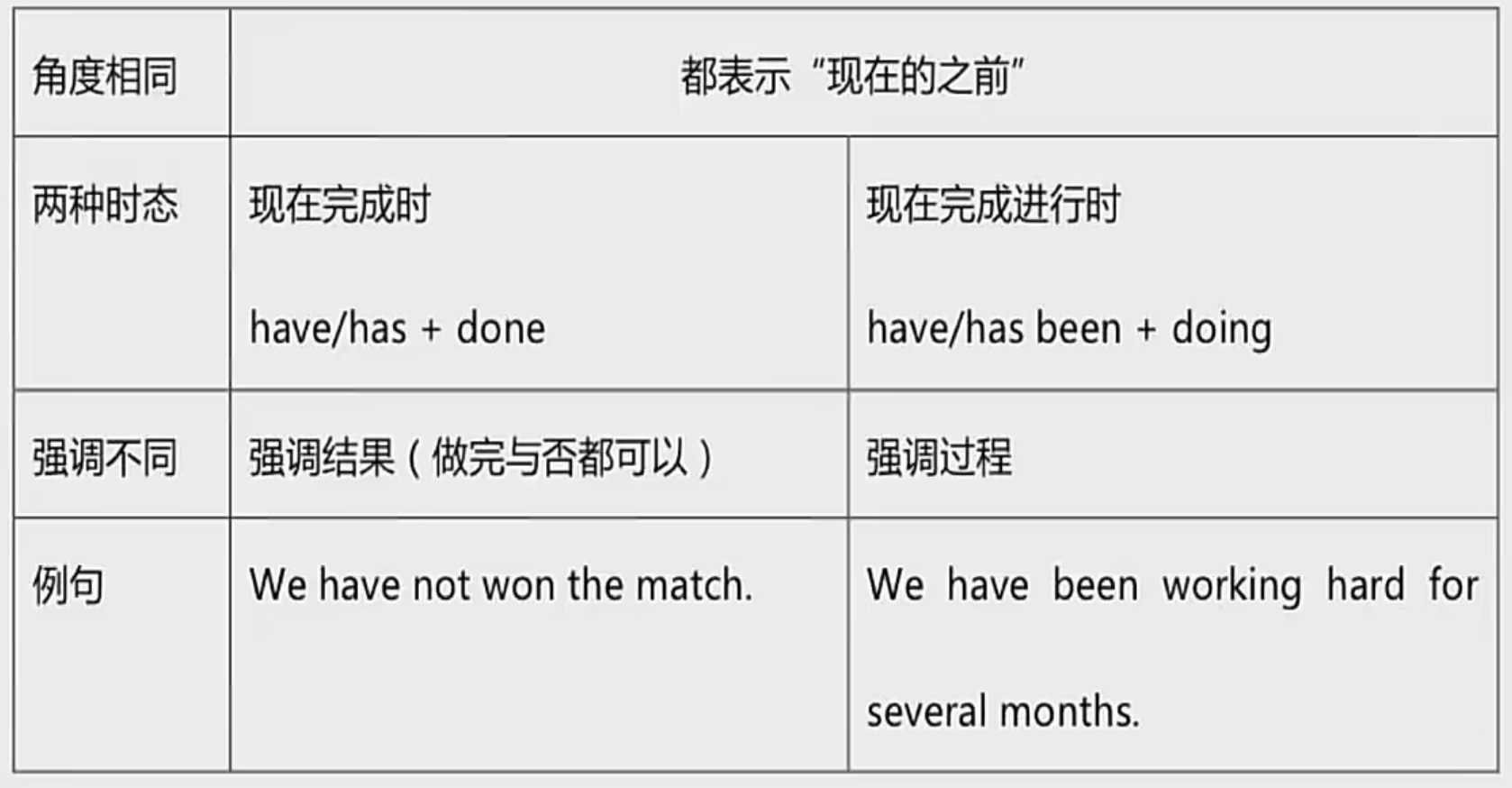
Present Perfect (emphasis)
- Meaning: Viewed from the present, the present perfect links an earlier situation to the present;
- Finite verb = $have、has+done$
- Example:
- The ethical judgments of the Supreme Court justices have become an important issue recently.
- Common situation: The present perfect often includes an adverb to emphasize
->$already、just、ever、never、also、long$; - Present perfect VS simple past tense
- 1. Use the simple past with a finished past-time expression; use the present perfect when the time period or present relevance remains open;
- Core in the present: emphasizes it has an impact on the present, present perfect: He has left, so I cannot find him now;
- Core past: occurred in the past, simple past tense: He left two hours ago;
- 2. For a situation that began in the past and continues now, the present perfect is normally required;
- Doing this from the past to the present, and still ongoing: We have learned English for 15 years.
Future perfect tense (rarely appeared)
- Meaning: Before the future, up to the future;
- For example: to complete this task by the end of this year;
- Finite verb = will have done
- Example:
- relaxation will be in front of smell-television, and digital age will have arrived
Summary
2.2.3.4 Perfect Progressive Aspect
Perfect Progressive
- Meaning: Emphasizes duration or ongoing activity leading up to a reference point;
- Finite verb = have been doing;
Present Perfect Continuous Tense
- Finite verb = have/has been doing.
2.2.4 A good example
- I love you
- Simple present tense
- I love you;
- I loved you
- Simple past tense
- I loved you;
- I will love you
- I will love you
- I have loved you
- Present perfect tense
- The state began before now and remains relevant now;
- I had loved you
- Past perfect tense
- The loving occurred before another past reference point; the sentence alone does not state the present situation;
2.3 Past-Paper Practice
Question: The use of this little-known practice has accelerated in recent years...
- The use of this little-known practice: a practice that is rarely used;
- It has accelerated in recent years;
Title:Readers are migrating away from print anyway.
Question: But what will be the nature of that difference?
- nature:
- 1. Nature;
- 2. Nature;
Question: Dr. Yehuda notes another difference between the sexes
- Simple present tense;
Title:.... Lots of working folks had already seen signs of the slow down themselves
- Past perfect tense;
Question: In recent years, railroads have been combining with each other...
- Present perfect continuous tense;